


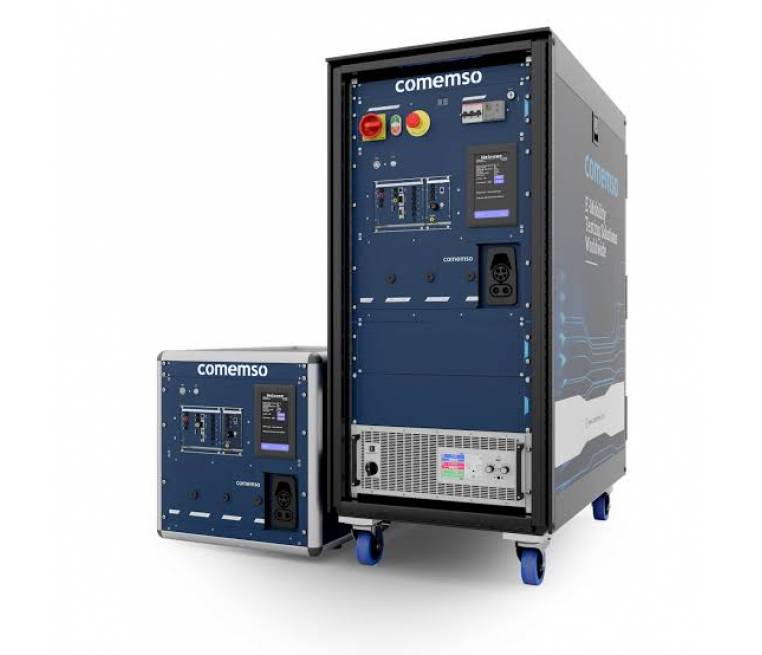

Easy Chester EOL / EOL HPC-EVSE end-of-line production tester
Every charger leaves production with a test report
Easy Chester EOL runs the same automated end-of-line test on every AC or DC charging station before it leaves production, integrated into your production line and MES – instead of manual checks with separate instruments.
Used in production – for legal-metrology end-of-line testing and with customer-owned power electronics.
This product is temporarily out of stock. You may opt-in our waiting list and we'll notify you once the product is restocked.
Product Overview
Configure Easy Chester EOL for your charging product
The required charging connectors, test functions and production interfaces come together in a compact EVSE tester.
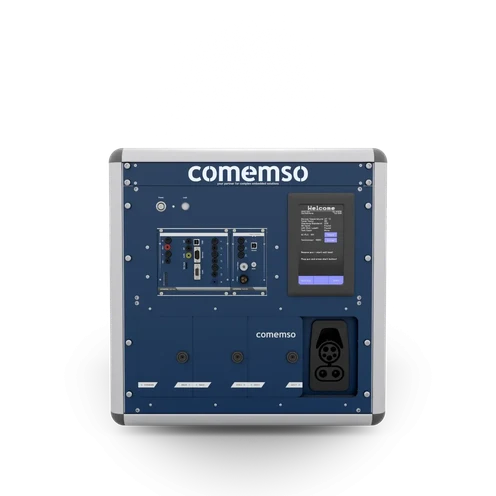
Standalone operation and factory integration
Operators run the guided workflow on the device. Automated lines control the test through the agreed production interface.
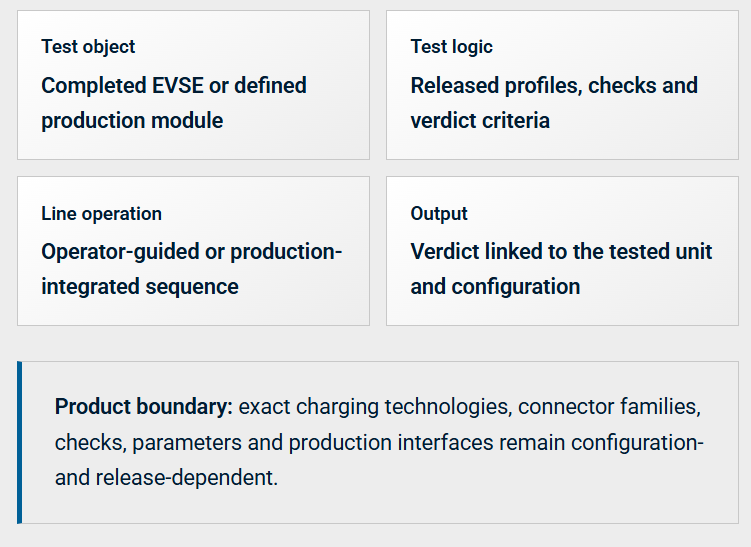
Extend the production test to higher power with Easy Chester EOL HPC
EOL HPC adds the source, load, switching, protection and cooling required by the charger and production cycle to the shared charging test workflow.
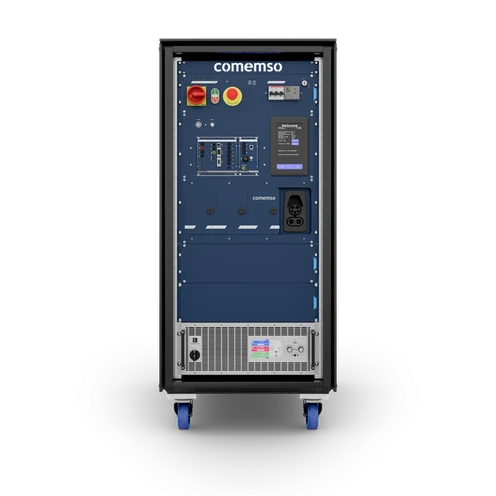
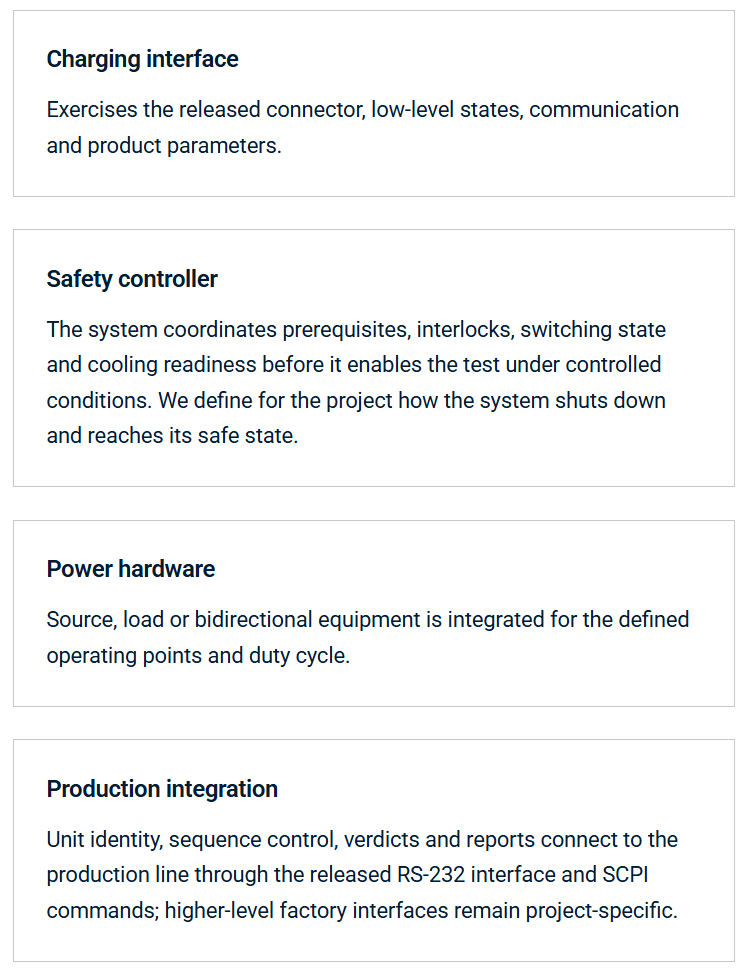
Project-specific power architecture
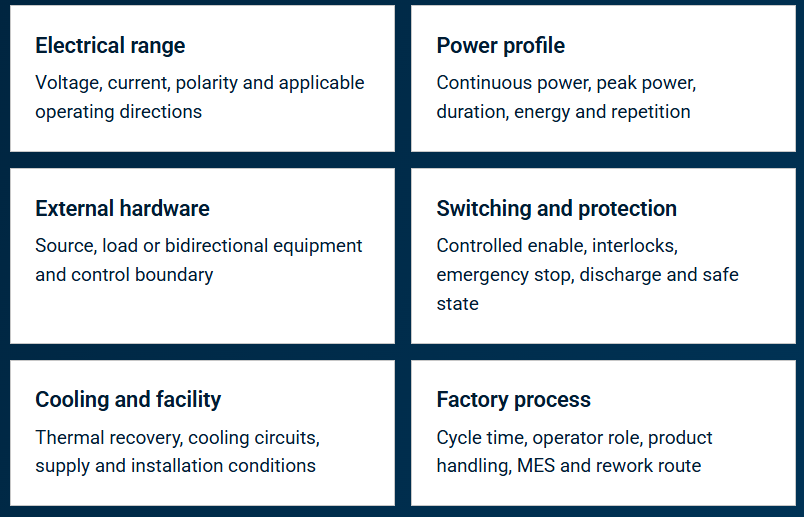
Size the test cell for your charger and production cycle
We specify electrical, thermal, timing and facility requirements for the device under test (DUT) and production cycle separately.
FAQ
What is Easy Chester EOL?
Easy Chester EOL runs repeatable EVSE end-of-line tests in production. It performs approved function, charging communication and parameter checks, evaluates the results and links them to the tested product identity.
What does an EVSE end-of-line test verify?
It verifies the completed charging product or a defined production module against released factory acceptance criteria before release.
Can one system handle different charger variants?
Store product and test configurations for the charger variants. Select the approved profile through the production identity or operator workflow to apply the matching test logic consistently.
How is the result linked to the manufactured unit?
The project can associate the test with approved identity fields such as serial number, variant, firmware, production order and timestamp.
Can Easy Chester EOL be integrated with production control or MES?
The production interface uses RS-232 with SCPI commands for straightforward line integration.
What is the difference between Easy Chester EOL and EOL HPC?
Easy Chester EOL is the compact production path for repeatable EVSE function, communication and parameter verification. EOL HPC adds the project-specific source, load, cooling, switching, safety and high-power test-cell integration required by DC fast-charging products.
What is Easy Chester EOL HPC?
Easy Chester EOL HPC is the Easy Chester production system for repeatable end-of-line verification of DC fast-charging and high-power EVSE products. It coordinates charging-interface tests, safety-relevant production checks, external power hardware, automation and traceable records.
What can be the device under test?
Define the DUT as the complete charger or a production module such as the charging outlet, communication controller, power stage or metering path.
Does Easy Chester EOL HPC have one universal voltage, current or power rating?
No universal combined rating should be inferred. Voltage, current, continuous and peak power, duration, energy, cooling and facility requirements are defined independently. The approved project configuration selects compatible hardware.
Can the system test the charger at defined power operating points?
Yes, when the configured production cell includes the required source, load or bidirectional power hardware. The test sequence can establish approved operating points, verify the charger response and preserve the measurements and verdicts.
How does the system support safe high-power operation?
The production cell is configured around approved prerequisites, interlocks, switching, cooling readiness, controlled enable, emergency stop, shutdown and safe-state behaviour.